Jacob With the One-Liner
Joseph part 6 and a mad farmer's manifesto

Hello! Part 6 of the Joseph series dropped this morning. Here’s the latest:
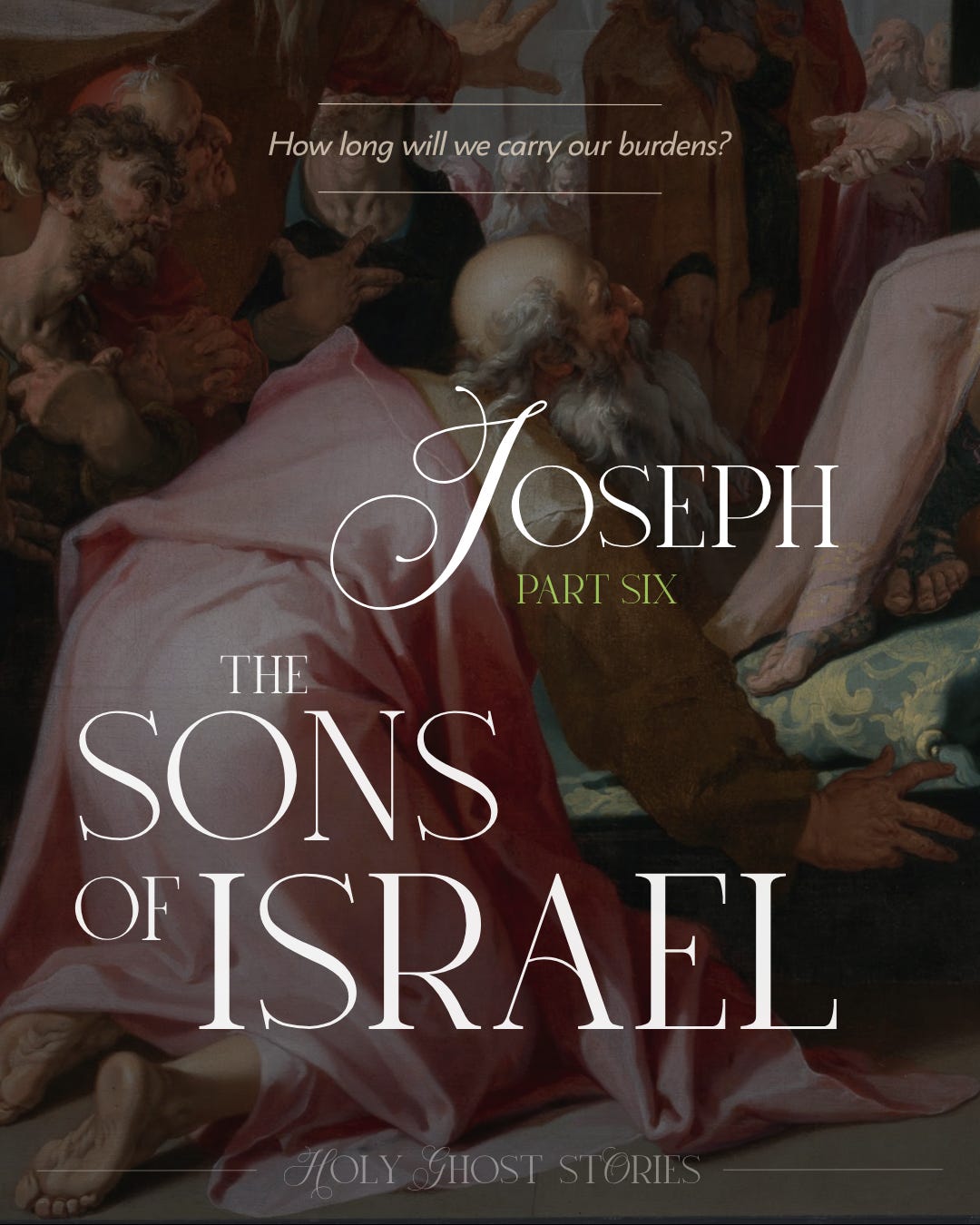
Surplus, Famine, (Awkward) Reunion
We pick up this episode of the Joseph story in Canaan with Joseph’s brothers and father haunted by the past. From there, we’re off to an imagined conversation between Joseph and his new wife, several good years, and then the brutal famine that provokes one of the most famous reunions in history.
I’m loving this series and I hope you are as well.
BITS AND BOBS
Sheesh, Dad - I love Genesis 42:1. Jacob’s sons are in a stupor, the entire clan in danger of starvation. The patriarch looks at his grown sons and delivers one of my favorite lines: “Why do you just keep looking at each other?”
Immediately, I know so much about this man and his relationship with his kids. Details like this in narrative Scripture are gold.
Leah - We don’t know when (or how), exactly, Leah dies. But the way she stops being mentioned in the narrative indicates a death sometime during Joseph’s time in prison and the years of famine. With this in mind, I’ve opened this episode with another allusion to illness. Before the end of the episode, she’ll be gone. (Surely that’s part of why Jacob finds himself clinging so tightly to Benjamin. He’s lost the love of his life, his favorite son, and now his longtime wife. The man’s heart has been broken a few times over.)
Joseph’s New Name - As a part of his promotion, Pharaoh bestows a new name on Joseph—an Egyptian one: Zaphenath-Panea. While its exact meaning is unclear to scholars, the consensus seems to be something like “The One to whom Secrets Are Revealed.”
Joseph’s New Wife - Pharaoh also gives Joseph a wife: Asenath, the daughter of a (likely high-ranking) priest in On/Heliopolis. Surely Joseph told her about Yahweh. Based on what they name their two boys, it seems she was on board with (and shared?) Joseph’s allegiance to his family’s God. Oh—and his father-in-law’s name is Potiphera. Interesting; hope that didn’t trigger Joseph too badly.
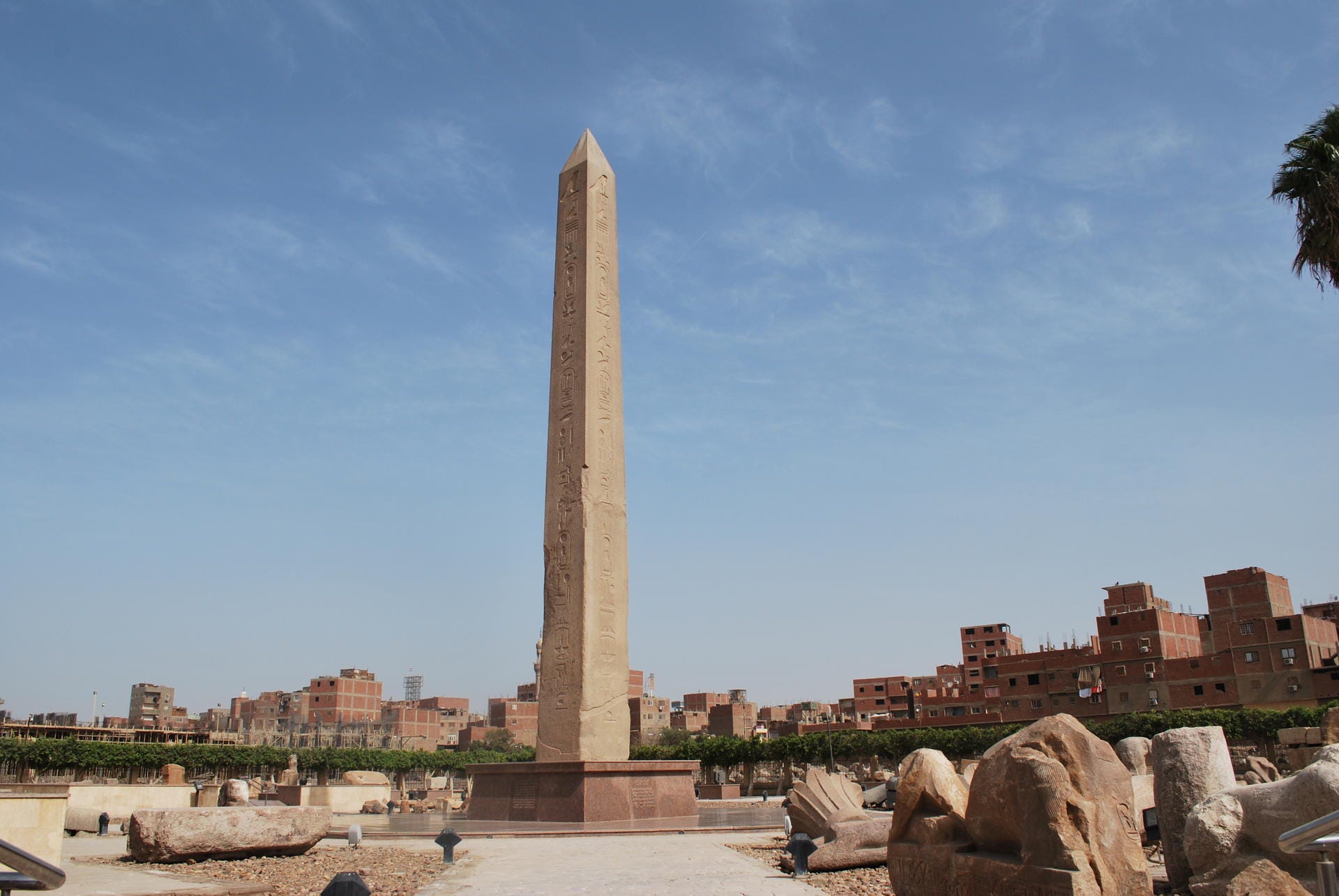
Asenath’s Hometown - In the second scene of this episode, I imagine Asenath remembering her home and mentioning a towering obelisk. That monument is the oldest obelisk still standing in its original location—you can travel to the ruins of Heliopolis and see it today.
The Sons of the Son of Israel - The names Joseph gives his children serve as poignant markers of the healing that’s happened over the years in Egypt.
Manasseh (“Forgetting”) bears a bittersweet meaning. Joseph says at his birth, “God has made me forget all my hardship [wonderful] and my whole family [ugh].”
When Joseph names his second son Ephraim (“Fruitful), he says, ““God has made me fruitful in the land of my affliction.” (Which is certainly true.) It made me think of Genesis 49, when Jacob blesses his sons at the end of his life. This is the blessing he gives to Joseph:
Joseph is a fruitful vine,
a fruitful vine near a spring,
whose branches climb over a wall.
God’s Quiet Faithfulness - I was telling someone this week that the Joseph story strikes me as especially relatable to a modern audience, thanks to how little audible communication we get from God. It’s not an Esther-level ‘hiddenness,’ but for as much of Genesis as the Joseph narrative occupies, God is surprisingly silent. Not at all absent, of course—not uncommunicative, even, but not “speaking” the way He does in other narratives.
As a nod to His understated presence, we continue a refrain in this episode that’s become a familiar one in this series: “Yahweh nods and continues His work.”
The Source of the Nile - While researching for this episode, I found myself down a bit of a rabbit hole regarding the source of the Nile (Blue Nile, White Nile, etc.)—it’s really fascinating. Here’s a picture of Lake Tana, the enormous lake in the highlands of Ethiopia I mention in the episode:

Oh—and if you’re in the mood for some very intellectual postulations regarding the Nile’s true source, I recommend this episode of Top Gear:
Through an Interpreter - The interpretation aspect of Joseph’s interaction with his brothers adds an interesting layer to the dynamic (as translation always does). Here’s a great video essay from Evan Puschak on how the creaters of the recent Shogun series leveraged a similar dynamic:
Unseen Brothers - It’s impossible to miss the echo of the Jacob/Esau/Isaac story in the Joseph-and-his-brothers reunion scene. Both feature mistaken identity highlighting an unmet longing to be seen (the Tamar/Judah story includes this as well). I’ve underscored this parallelism by using language that hearkens back to a prior episode of HGS:
S8E6:
Joseph leans closer. Looks into the eyes of his brothers, searching for recognition. Nothing.
S1E5:
“Are you really my son Esau or not?”
Jacob walks closer. Looks into the eyes of his father, searching for recognition. But those eyes are dim—unfocused—staring beyond him.
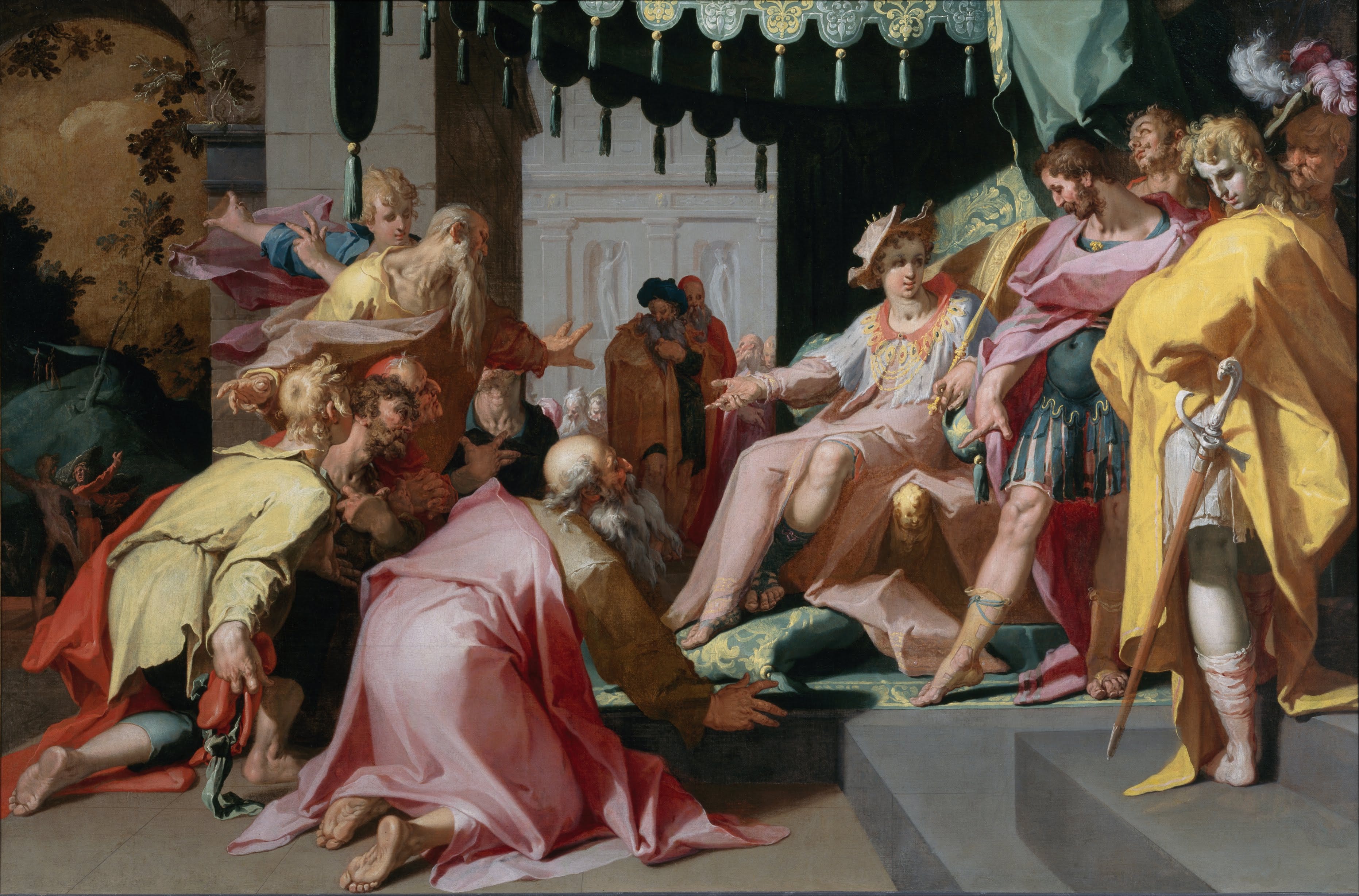
Episode Artwork - The above graphic features Bloemaert’s depiction of Joseph and his brothers. It’s beautiful. I think it’s also safe to say they weren’t dressed in quite the same wardrobes as Bloemaert imagines. (Nor, I suspect, were they quite as…caucasian.)
ENJOY
I hope “The Sons of Israel” blesses you. Always happy to hear your impressions.

LISTEN ON: APPLE PODCASTS | SPOTIFY | AUDIBLE | WEB
How We Make This
People ask me all the time: So how do you fund Holy Ghost Stories? Sometimes it feels like the honest answer would be, “Sporatically.”
The entirety of HGS is enabled by listeners who refuse to just consume and decide to contribute. And monthly giving is our lifeblood, providing a modicum of predictability/consistency to a budget that brings people all over the world into faith-shaping encounters with Yahweh.
Do you give yet? We’d be so grateful if you did. If you want to be on the team, click here and choose “monthly.” Thanks so much.
One Cool Thing
Manifesto: The Mad Farmer Liberation Front - A friend recently introduced me to this poem my Wendell Berry. It’s wonderful.
Love the quick profit, the annual raise,
 vacation with pay. Want more
 of everything ready-made. Be afraid
 to know your neighbors and to die.
 And you will have a window in your head.
 Not even your future will be a mystery
 any more. Your mind will be punched in a card
 and shut away in a little drawer.
 When they want you to buy something
 they will call you. When they want you
 to die for profit they will let you know.

 So, friends, every day do something
 that won’t compute. Love the Lord.
 Love the world. Work for nothing.
 Take all that you have and be poor.
 Love someone who does not deserve it.
 Denounce the government and embrace
 the flag. Hope to live in that free
 republic for which it stands.
 Give your approval to all you cannot
 understand. Praise ignorance, for what man
 has not encountered he has not destroyed.

 Ask the questions that have no answers.
 Invest in the millennium. Plant sequoias.
 Say that your main crop is the forest
 that you did not plant,
 that you will not live to harvest.
 Say that the leaves are harvested
 when they have rotted into the mold.
 Call that profit. Prophesy such returns.

 Put your faith in the two inches of humus
 that will build under the trees
 every thousand years.
 Listen to carrion – put your ear
 close, and hear the faint chattering
 of the songs that are to come.
 Expect the end of the world. Laugh.
 Laughter is immeasurable. Be joyful
 though you have considered all the facts.
 So long as women do not go cheap
 for power, please women more than men.
 Ask yourself: Will this satisfy
 a woman satisfied to bear a child?
 Will this disturb the sleep
 of a woman near to giving birth?

 Go with your love to the fields.
 Lie down in the shade. Rest your head
 in her lap. Swear allegiance
 to what is nighest your thoughts.
 As soon as the generals and the politicos
 can predict the motions of your mind,
 lose it. Leave it as a sign
 to mark the false trail, the way
 you didn’t go. Be like the fox
 who makes more tracks than necessary,
 some in the wrong direction.
 Practice resurrection.
That’s the latest! Excited for you guys to listen to “The Sons of Israel.”
Gratefully,
Justin